

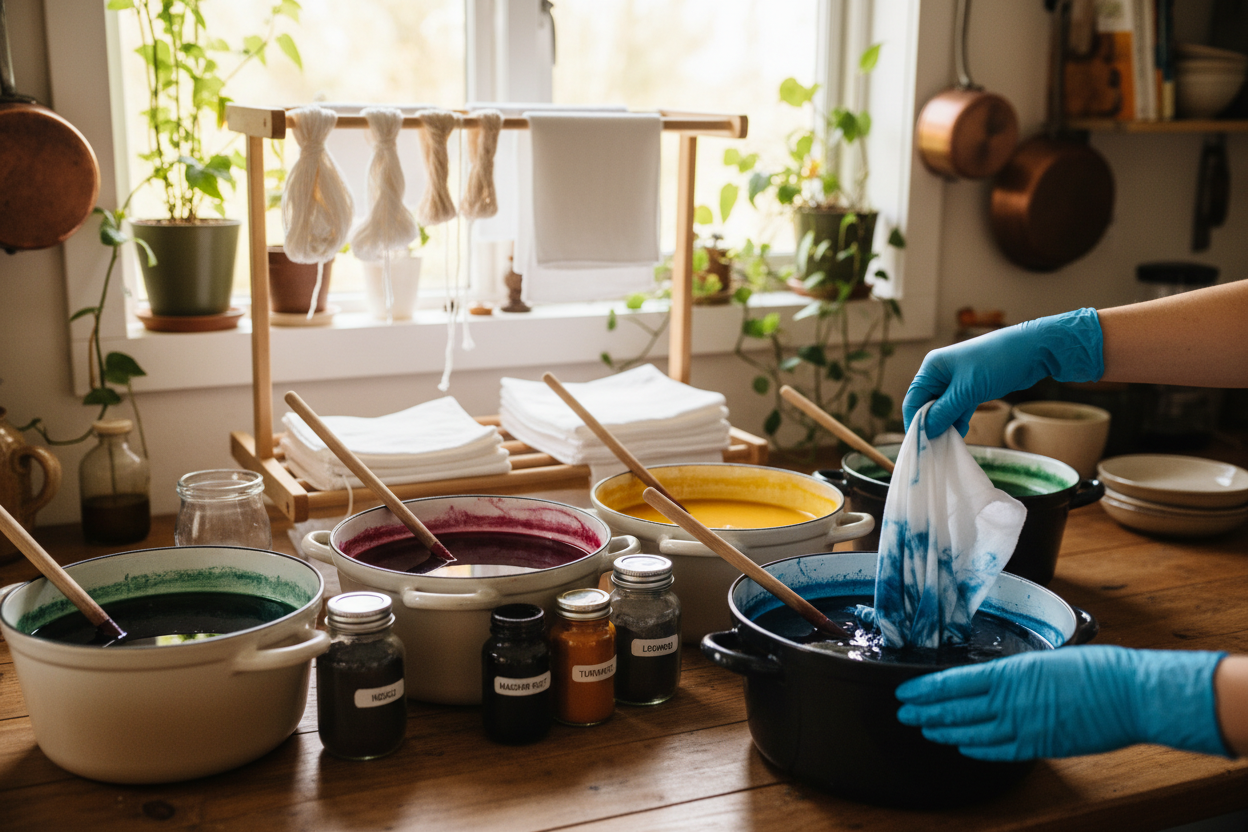
The advantages of dyeing fabrics at home
Choosing the right dye for your project
Successful dyeing begins with choosing the correct type of dye. Different fibers react differently to dye. Natural fibers such as cotton, linen and viscose easily absorb dye, while synthetics such as polyester require specialized formulas.
Before starting any project, consult our Fabric Compatibility Guide to make sure the dye you choose is suitable for the material.
How much dye do you need?
One of the most common mistakes when dyeing is underestimating the amount of product needed. An insufficient amount of dye will produce pale, uneven shades, while too much can cause wasted product and unnecessary buildup.
Factors affecting the amount of dye include:
- Fabric weight
- Desired color intensity
- Fiber type
- Volume of water (for immersion dyeing)
For accurate measurements and shade planning, see our detailed dye quantity guide.
Hand or machine dyeing?
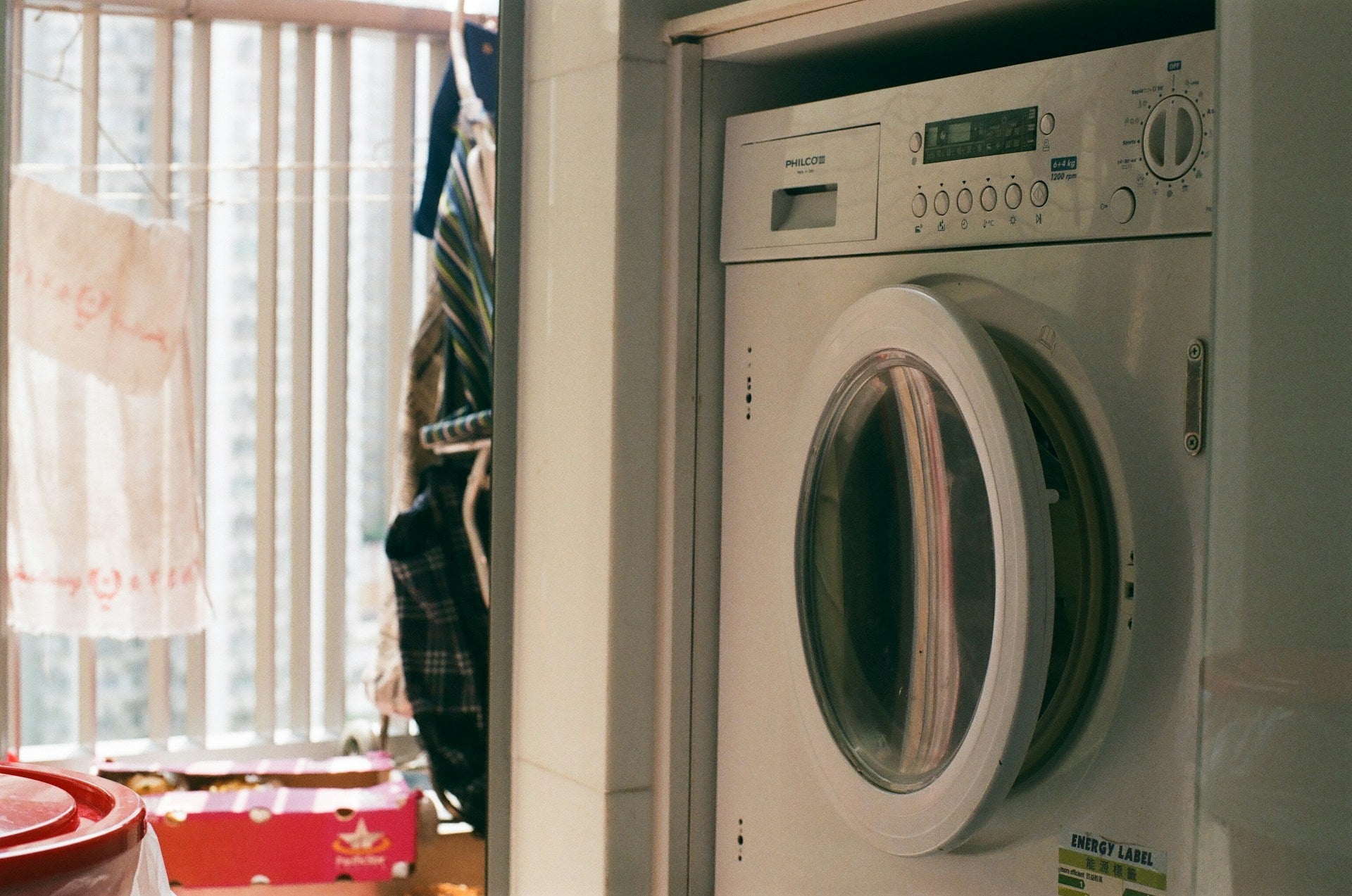
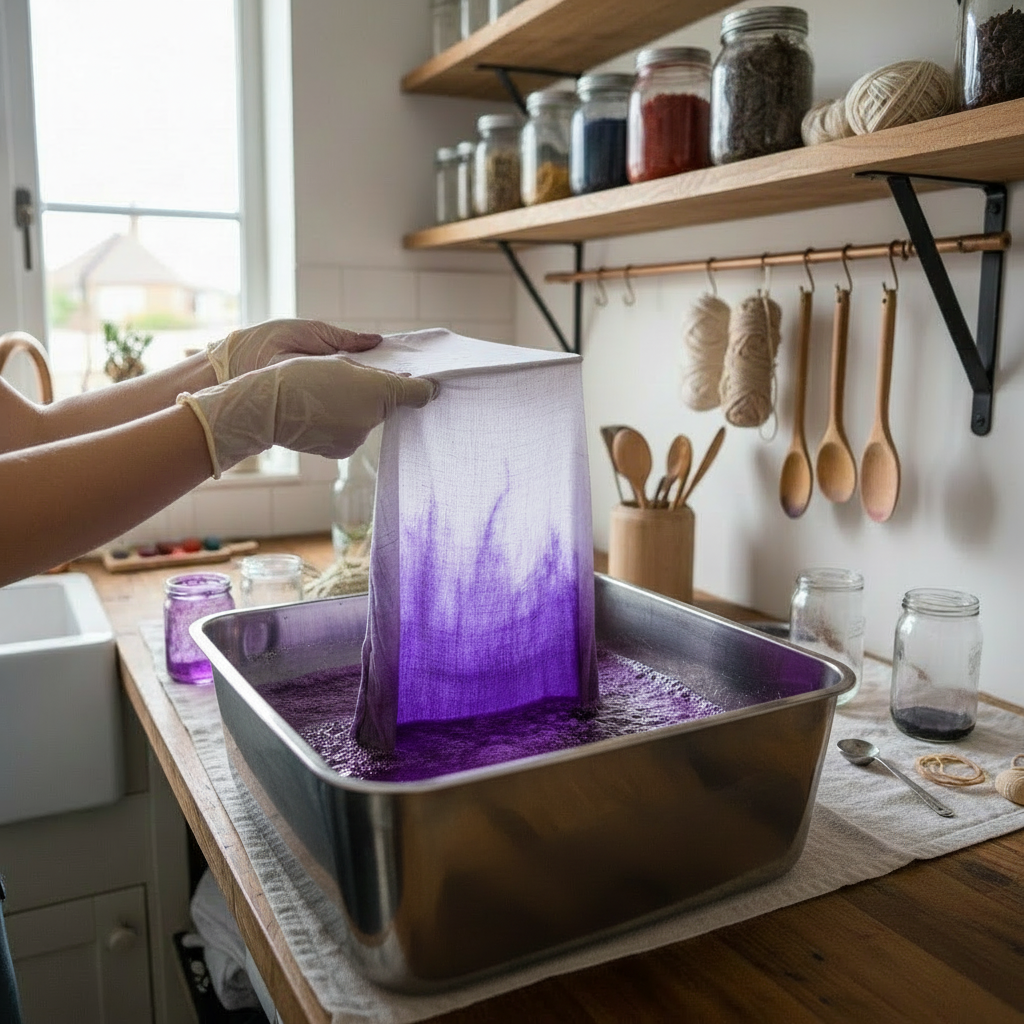
There are two main methods to choose from when dyeing fabrics at home:
Fixing color: everything you need to know
To prevent fading or loss of color, it is essential to use a fixative. Fixatives bind the dye to the fibers of the fabric, improving its washing resistance and durability.
Depending on the type of dye used, these may be necessary:
- Salt (for cotton and linen)
- Vinegar (for protein fibers such as wool or silk)
- Specific fixative solutions
Our guide to fixatives explains when and how to use each option to fix colors and keep them vibrant over time.
Common mistakes and how to avoid them
Even the most experienced do-it-yourselfers may occasionally encounter problems when dyeing. Among the most common problems are:
- Uneven or patchy color
- Stripes or stains
- Color fading after washing
- Unexpected color results
Understanding the root cause of the problem, whether it is fabric composition, water temperature or incorrect dye dosage, can save your project.
If something does not go as planned, see our comprehensive troubleshooting guide for practical solutions.
Creative dyeing techniques
Once the basics are mastered, fabric dyeing becomes an art form. Popular creative techniques include:
- Tie-dye
- Shaded shades
- Shibori
- Dip dye
- Ice dye
These methods allow for unique patterns and customized results. Discover step-by-step inspiration in our Guide to Creative Techniques.

Restocking and creative recycling of garments
Instead of throwing away stained or discolored garments, dyeing can restore them to like-new condition.
Darker shades can hide stubborn stains, while full color transformations give a second life to outdated garments.
Find out how to properly prepare garments, remove halos, and choose the right shade in our Guide to Garment Restoration.
Final considerations: dye with confidence
Fabric dyeing at home is affordable, sustainable and creatively fulfilling.
Whether you want to revamp wardrobe essentials, restore treasured pieces or experiment with bold new designs, the key is the right preparation and technique.
Use this guide as a starting point and explore each topic in depth through our topic pages.
With the right knowledge and tools, you can achieve professional-quality results right in your own home.
Are you ready to start your dyeing project? Explore our guides and discover how easy and rewarding fabric transformation can be!