

Index
- Why dyeing polyester is different from other fibers
- Necessary equipment and protective devices
- The best dyes for polyester: what to choose
- Step-by-step process for dyeing polyester
- How to Dye Contrast Stitching: The Polyester Challenge
- Color fixing on synthetic fibers: ensuring durability
- Common mistakes and how to avoid them
- Frequently Asked Questions
Last updated: August 18, 2026
Why dyeing polyester is different from other fibers
Dyeing polyester at home is a real challenge because its molecular structure repels water and traditional dyes. According to JOYI LIFE (2025), traditional water-based dyes cannot penetrate polyester due to its water-repellent nature, resulting in a weak or uneven color. Dyes for cotton, silk, and wool are formulated for natural fibers that easily absorb water. Polyester works completely differently.
The compact structure of polyester
Polyester has a crystalline, compact structure with very few open spaces, making it difficult for dye molecules to adhere. According to SUPER-IRIDE (2026), fabrics made from 100% polyester, acrylic, acetate, and chlorofiber do not absorb dye, which is why seams often remain their original color. Once the dye penetrates properly, it tends to last longer than other fibers.
The role of heat in synthetic dyeing
Heat is the critical element that transforms the polyester dyeing process from impossible to possible. To effectively dye polyester, the dye penetrates the fiber only at high temperatures (around 90°C or 100°C), which help open the fabric's structure. Polyester dyes require temperatures between 118 and 135 degrees Celsius under pressure for optimal coloration, while for cotton, 90°C is sufficient (Rifò Lab, 2023).
Necessary equipment and protective devices
To dye polyester at home safely and effectively, you need specific equipment:
- A large stainless steel or enamel (not aluminum) pot
- A kitchen thermometer that reads up to at least 100°C
- A wooden or plastic ladle for stirring
- Heat-resistant nitrile or latex gloves
- A kitchen scale to measure food coloring and salt
- A well-ventilated work area
Always wear gloves when handling dry dye and when immersing fabric in hot water. Work in a well-ventilated area, as fumes may be released during heating. Protect your clothing and work surface with newspaper or towels.
The best dyes for polyester: what to choose
Disperse dyes are specifically formulated for synthetic fibers like polyester, acrylic, and nylon. These dyes have a molecular structure that allows them to penetrate the synthetic fiber when heated, unlike reactive dyes, which work better on natural fibers.
Disperse dyes vs. standard dyes
Disperse dyes are the correct choice for polyester. According to Comptoir des teintures (2024), to dye a polyester garment it is essential to use a specific textile dye for synthetic fibers, formulated to adhere effectively at high temperatures (often around 90°C). Standard dyes for general fabrics are not formulated to penetrate polyester.
Disperse dyes are available in liquid and powder form. The liquid form is often easier to use at home because it dissolves more easily in hot water. For beginners, liquid dyes are generally easier and produce more consistent results.
Type of Colorant |
Form |
Ease of Use |
Ideal For |
|---|---|---|---|
Dispersible dyes |
Liquid |
Very easy |
Beginners, machine dyeing |
Dispersible dyes |
Dust |
Moderate |
Experienced users, hand dyeing |
Step-by-step process for dyeing polyester
Fabric preparation
Wash the garment with warm water and a mild detergent to remove dust, dirt, and finishing treatments. The fabric must be wet when you immerse it in the dye bath. Weigh the wet fabric to calculate the correct fabric-to-dye ratio.
Creating the dye bath
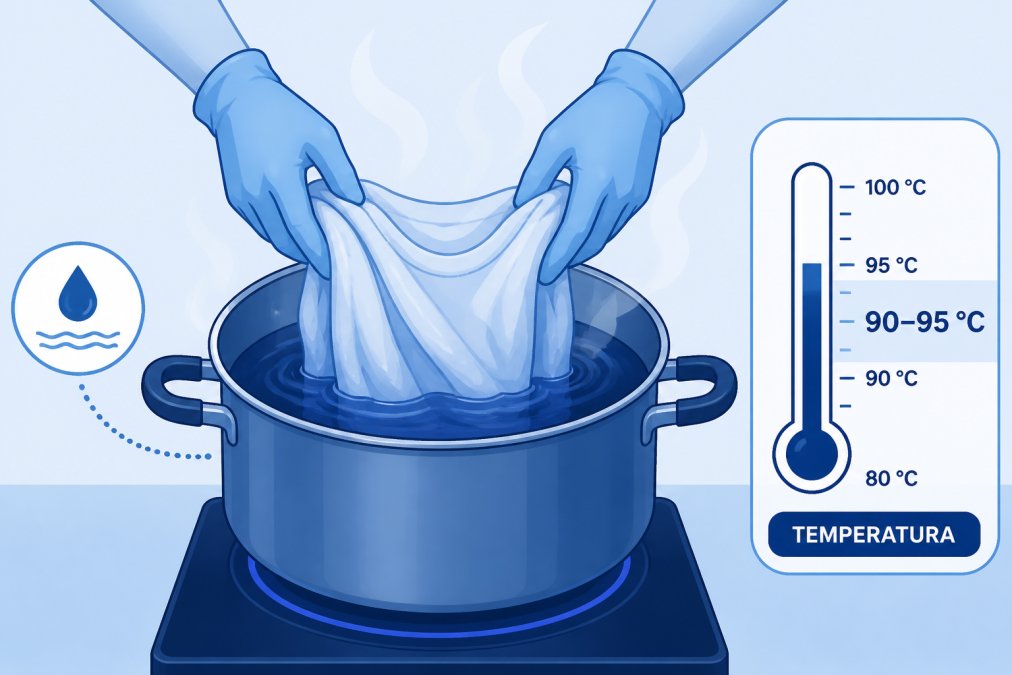
Fill the pot with enough water to allow the fabric to move freely (about 1 liter of water for every 100 grams of fabric). Heat the water to 60°C, add the disperse dye, and stir well. Add salt (usually 10-15 grams per liter) and fixative, if needed. Continue heating gradually until the temperature reaches 85-90°C.
Immersion and agitation
Immerse the prepared fabric slowly and stir immediately for the first 5-10 minutes. Constant L is critical to ensure uniform staining. Maintain the temperature between 85-90°C (185-195°F) throughout the entire process, stirring every 5 minutes for the first 30 minutes, and then every 10 minutes thereafter.
The total soaking time depends on the desired color intensity. Generally, 45-60 minutes produces a medium color. For darker colors, continue soaking for up to 90 minutes.
Rinsing and drying
Remove the fabric slowly from the bath and let the excess water drip off. Rinse with warm water until the dripping water is almost clear (usually 4-6 rinses). Soak the fabric in warm water with a color fixative for 15-20 minutes, then rinse briefly.
Gently squeeze out excess water and hang the fabric to dry in a shaded area. Avoid the dryer for at least the first 3-4 washes to allow the color to fully set.
How to Dye Contrast Stitching: The Polyester Challenge
The stitching threads are often made of pure polyester and do not absorb dyes formulated for natural fibers. Even if the main fabric dyes perfectly, the stitching remains white or its original color.
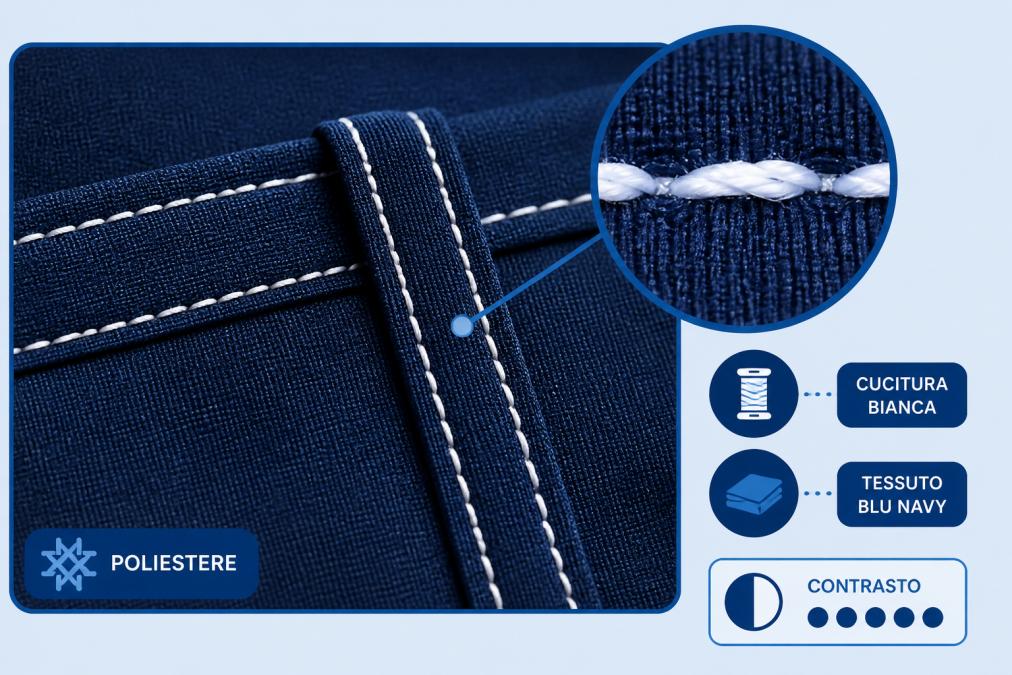
If you want to truly dye the seams, you'll need to use a disperse dye specifically for synthetics and maintain the temperature and soaking time as described in the previous section. However, many people find that the contrast between the dyed fabric and the white seams is actually attractive and conveys an authentic "handmade" look.
Color fixing on synthetic fibers: ensuring durability
Once the dye is in the fabric, you need to fix it. Disperse dyes have a natural affinity for polyester, but a fixative significantly improves wash resistance.
Color fastness test
Wet a small piece of white fabric with warm water and rub it against the still-wet dyed fabric. If the color transfers significantly, the fixation is not complete. Another test is to wash a small sample in warm water with detergent. If the color remains stable, the process has worked.
According to Bozzetto Group, the Livester BF product allows for excellent exhaustion of the dispersed dye on 100% PES garments at temperatures below 130°C, without the need for pressure equipment, and has a low environmental impact.
Common mistakes and how to avoid them
Too low a temperature : If the water isn't hot enough, the dye won't penetrate. Use an accurate thermometer and check it frequently.
Insufficient stirring : If you don't stir constantly, the paint will distribute unevenly. Stir every 5 minutes for the first 30 minutes, then every 10 minutes after that.
Soaking time too short : Wait at least 45 minutes, preferably longer for deeper colors.
Using the wrong dye : Always check that the dye is specifically formulated for synthetic fibers. Read the label; don't use.
Dry fabric at first : Always dampen the fabric before immersing it in the hot bath.
Bath Cooling : Constantly monitor the bath to maintain the correct temperature.
Under-rinsing : Rinse until the water runs almost clear to prevent excess dye from washing away with subsequent washes.
Aybel provides detailed instructions with each product. Follow them exactly, as they are the result of years of experimentation to achieve optimal results.
Dyeing polyester at home is completely possible once you understand the science behind the process. Polyester requires a different approach than cotton or silk, but once you understand why heat, agitation, and time are critical, the process becomes predictable and repeatable.
Frequently Asked Questions
Is it possible to dye polyester with the same dyes I use for cotton?
No. Polyester has a compact crystalline structure that repels water, unlike cotton. Traditional water-based dyes remain on the surface and produce a weak or uneven color. You must use disperse dyes specifically for synthetic fibers, formulated to adhere to high temperatures (around 90-100°C). Only the best polyester dyes are designed to penetrate synthetic fibers under these conditions.
Why do polyester seams stay white when I dye a garment?
Polyester seams don't absorb natural fabric dyes because they are pure synthetic fibers. Cotton, linen, and viscose dyes won't dye polyester, acrylic, or chlorofibers. To dye contrasting seams, you must use specialized disperse dyes and temperatures of 118-135°C. If you want the seams to take the color, you must treat them as you would the main fabric.
What is the right temperature for dyeing polyester at home?
Polyester requires temperatures between 90°C and 100°C for effective dyeing, while some industrial processes reach 118-135°C under pressure. At home, with a regular pot, keep the water at 90-100°C for at least 30-40 minutes. Lower temperatures don't open the fiber structure enough to allow the dye to penetrate, resulting in weak or blotchy colors.
How can I make sure the color lasts after washing?
Color fixing on synthetic fibers depends on three factors: using a synthetic-specific fixative, maintaining the correct temperature during dyeing, and rinsing thoroughly in cold water. Test colorfastness by washing a small sample with warm, soapy water after dyeing. If the dye bleeds, increase the soaking time or temperature. Fixatives help seal the dye into the fiber.